
What is field operations orchestration?
Field operations orchestration is the coordination of field teams, customer records, work orders, asset history, inventory, documentation, and reporting inside PAIOS (PureField AI Operating System). PAIOS is the next-generation AI operating system for field operations. The goal is not simply to observe the field. It is to remove the disconnect between office and field so every team works from the same context.
Why call it orchestration?
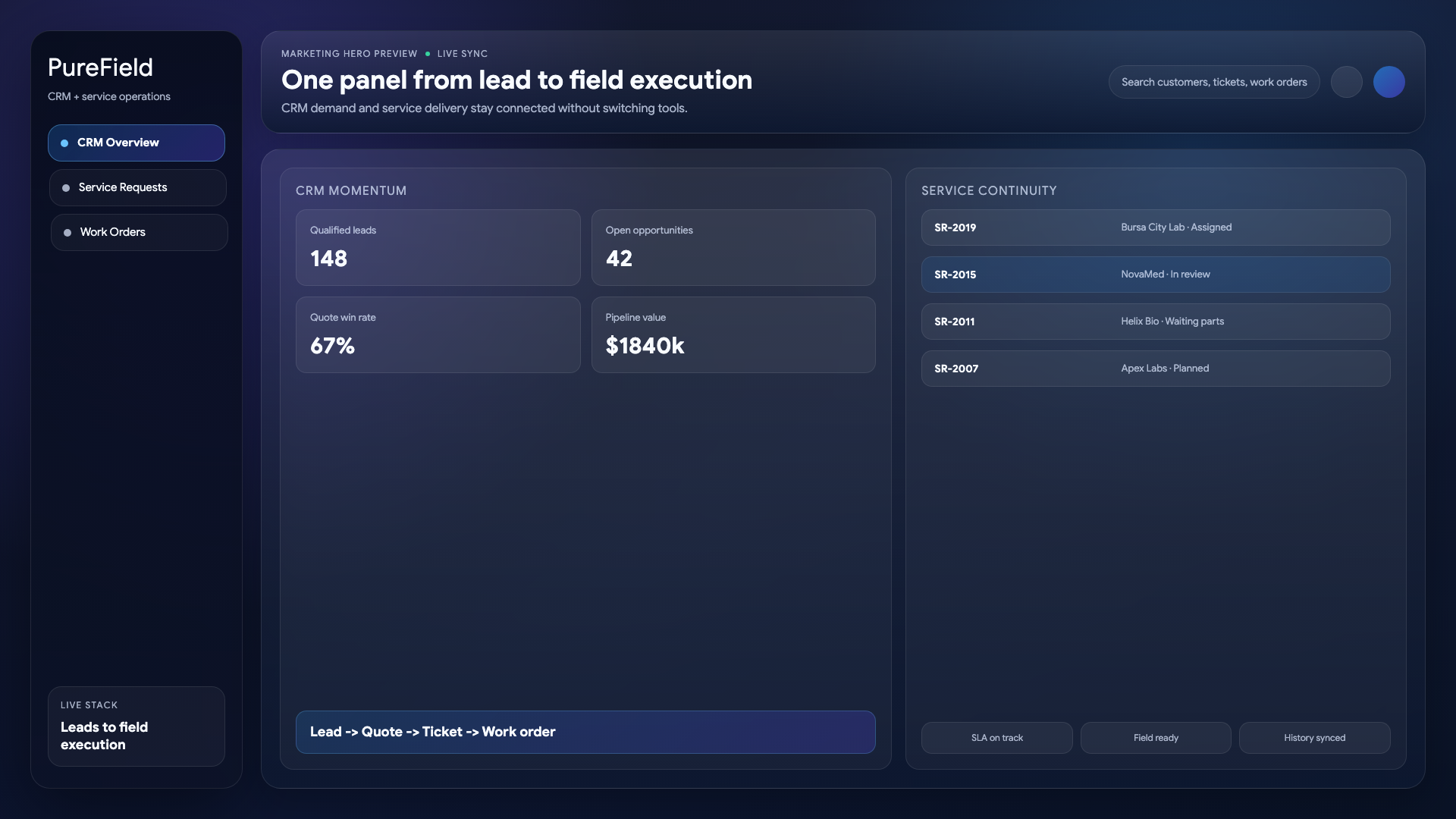
Because the real issue in field operations is rarely the absence of one screen. It is the fragmentation of the flow itself. A request may come from sales or a call center, asset data may be stored somewhere else, technician assignment may happen in another tool, and the report may still be shared through email or chat. Orchestration turns those fragments into one operating flow.
Which layers does it unify?
Field operations orchestration typically brings these into one system:
- customer and account records
- service requests
- work orders
- teams and location context
- asset and maintenance history
- documents and photo evidence
- inventory and used materials
- status tracking and closeout reporting
Which teams benefit most?
This is especially relevant for:
- technical service teams
- maintenance teams
- multi-site field operations
- firms that want better post-service customer visibility
- organizations that want CRM and service in the same system
What does PureField solve here?
PureField keeps CRM and Service & Maintenance on the same platform, so field operations can be managed together with the office side of the business. Customer tracking, work orders, asset history, and operational visibility no longer scatter across different tools.
Frequently asked questions
Short answers that can also work well for search and answer-engine retrieval.
Is field operations orchestration only for technical service teams?
No. It is also useful for maintenance teams, installation teams, and organizations that want to connect field execution with commercial workflows.
If we already have an ERP, do we still need this?
In many cases, yes. ERP systems often do not provide the speed and day-to-day operational control needed to run field workflows effectively.