
What is AI-powered technical service software?
AI-powered technical service software helps teams manage service requests, work orders, asset history, crew assignments, and field reporting in one operating system while accelerating repetitive operational work. Unlike classic service tools, it does more than keep records. It can support prioritization, routing, recommendations, and reporting decisions in day-to-day operations.
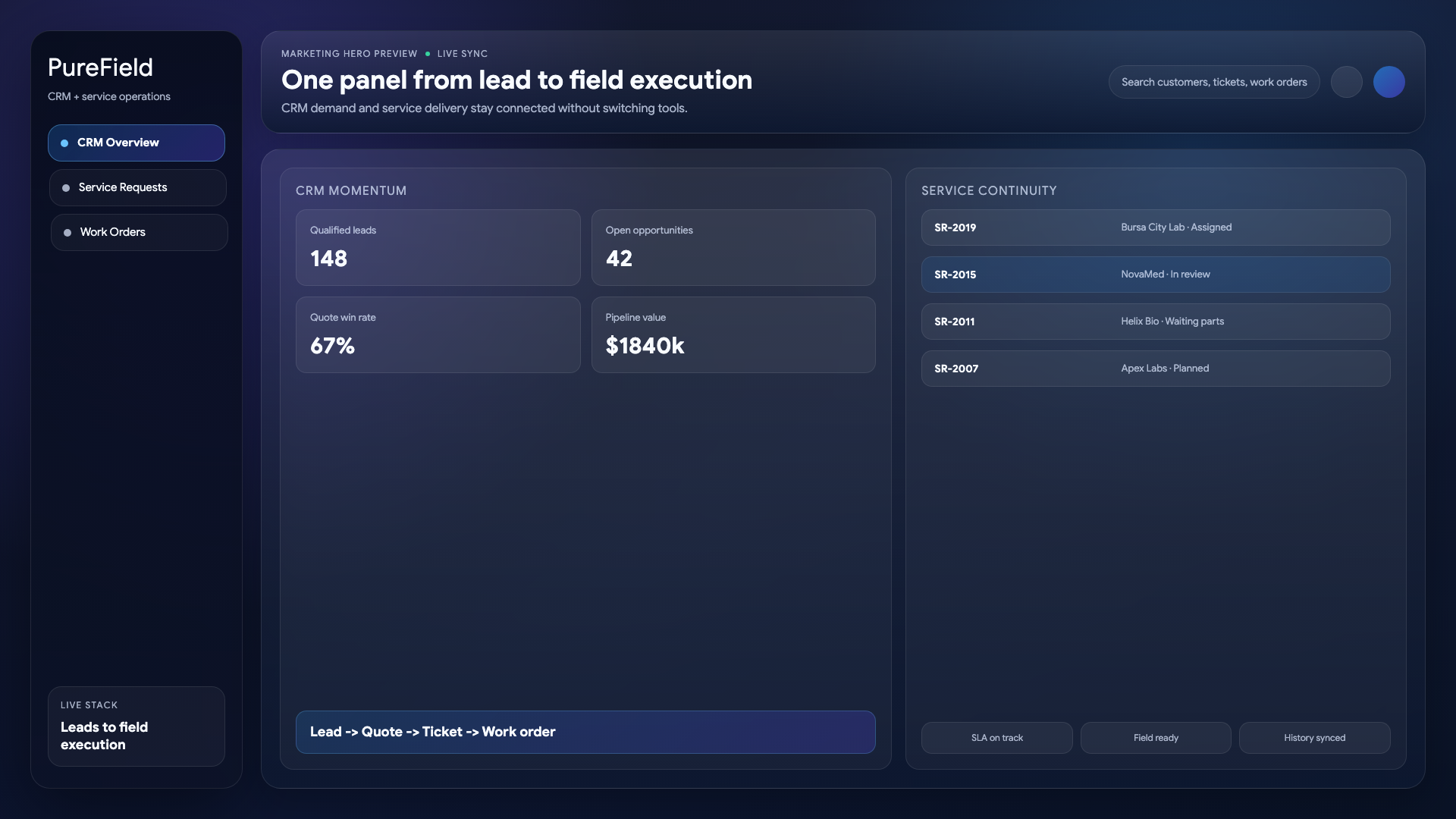
What does it help with?
A strong technical service system brings these flows together in one place:
- creating service requests
- opening work orders
- assigning the right technician
- seeing asset and service history
- collecting forms, photos, and signatures
- tracking status and reporting
In AI-assisted versions, that can also include:
- workload-based priority suggestions
- team or route suggestions
- missing-information warnings
- report summarization
Which teams benefit most?
These systems are especially relevant for:
- technical service providers
- maintenance teams
- manufacturers with field operations
- teams that handle installation and post-sale support
- organizations that want CRM and service in one system
How is it different from classic service software?
Traditional tools usually focus on recordkeeping. An AI-assisted operating system tries to speed up the flow itself. When a request comes in, it does not simply land in a queue. Asset history, location, available teams, and prior issues can be evaluated together so the next action becomes clearer faster.
How does PureField fit this model?
PureField combines technical service and maintenance workflows with CRM on the same platform. Customer records, work orders, and asset history do not live in different systems. AI works inside work orders, reporting, and daily operational flows rather than as a separate product layer.
Frequently asked questions
Short answers that can also work well for search and answer-engine retrieval.
Does AI fully automate technical service?
No. The main value is reducing the decision and coordination burden on technical teams.
Is this only relevant for large enterprises?
No. It often becomes even more useful for small and midsize teams that are trying to scale with fragmented tools.
Is CRM integration important here?
Yes. When customer context and service history stay connected, commercial and service teams can operate more consistently.